Basil Beattie: Another Place: Paintings from the 90s
Past exhibition
Overview
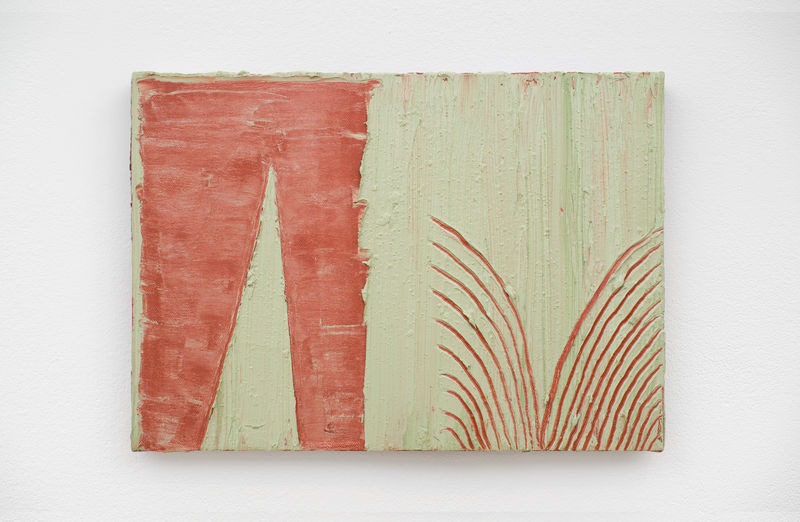
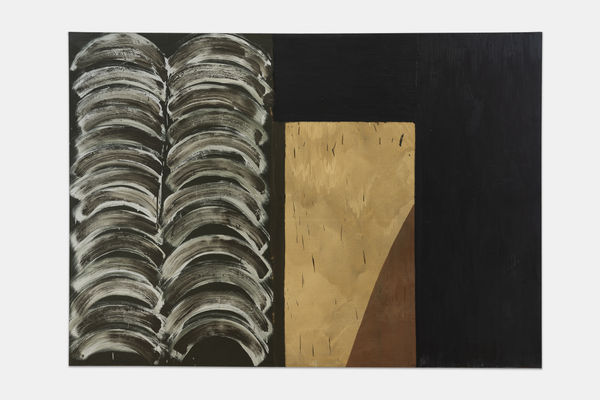
Basil Beattie, A Touching Sight, 1997
29 January - 28 February 2026
Opening Reception: Saturday 31 January, 2 - 4pm
Hales is delighted to announce Another Place: Paintings from the 90s, Basil Beattie RA's fourth solo exhibition with the gallery. A key figure in the development of post-war British abstraction, Beattie (b. 1935, West Hartlepool, UK) is known for his gestural, painterly compositions. Over a career spanning more than sixty years, he has carved out a rigorously process-based practice deeply concerned with the experiential and psychological qualities of painting.
The exhibition takes its title from the monumental painting Another Place, which anchors the show alongside a body of smaller-scale works. Together, they showcase Beattie's distinctive visual language and mark a pivotal decade of artistic development. From the late 1980s onwards, Beattie began to move away from pure abstraction, introducing simple motifs that became a resource of infinite possibility. He recognised that abstraction and mark-making could more fully express subjective experience when formal elements took on some of the characteristics of recognisable objects.[1]
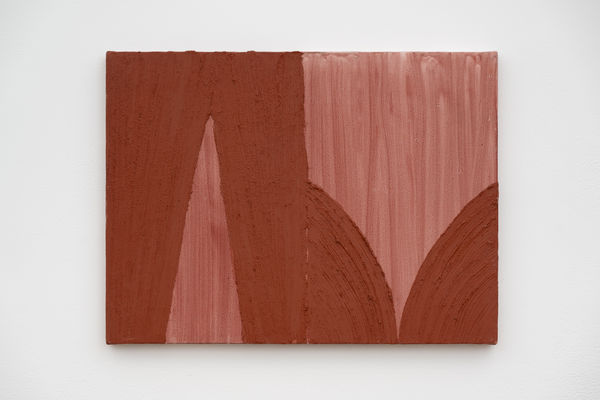
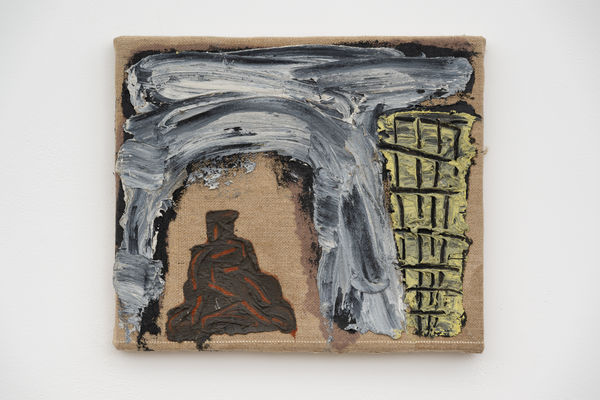
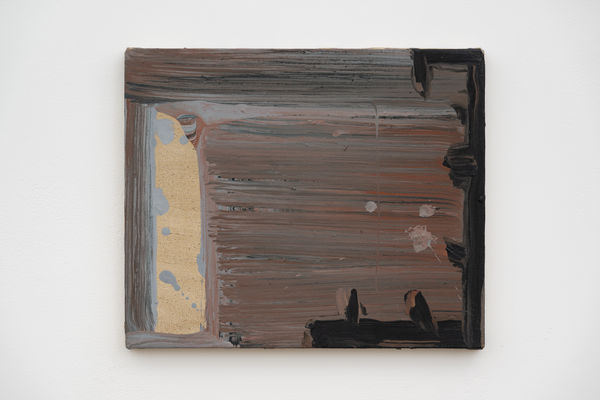
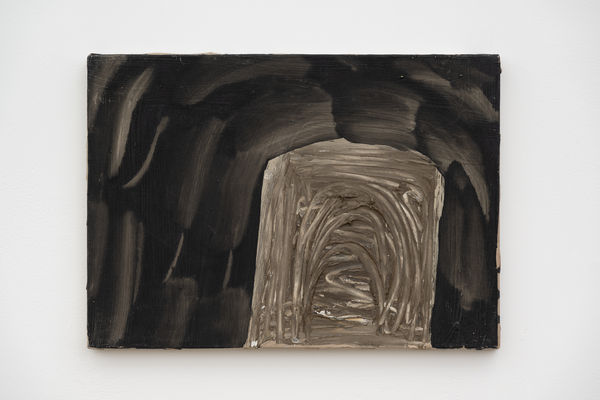
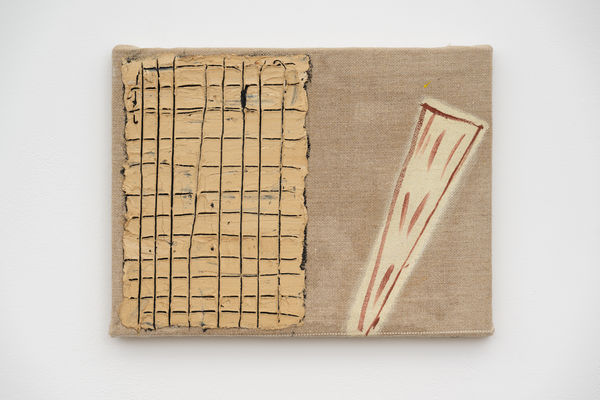
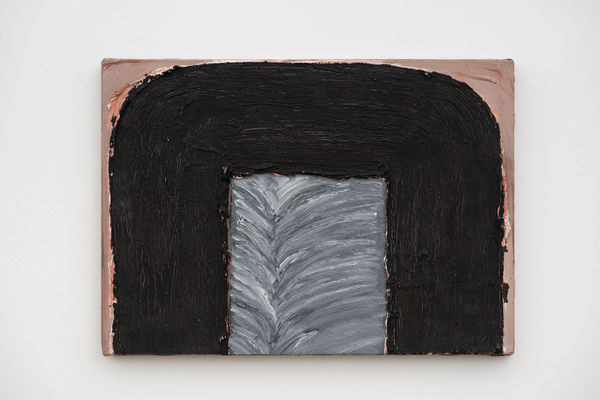
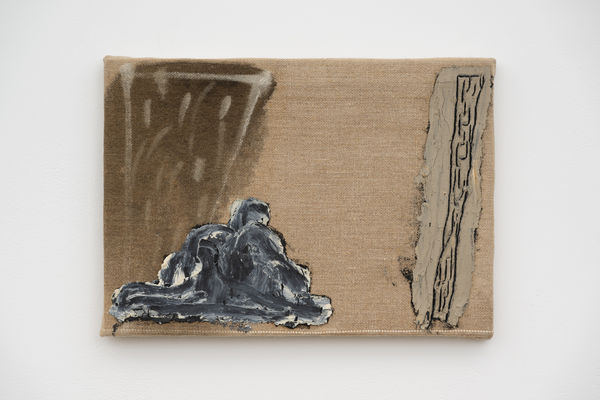
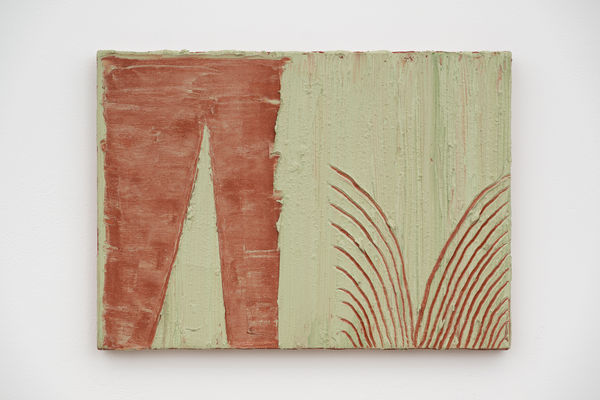
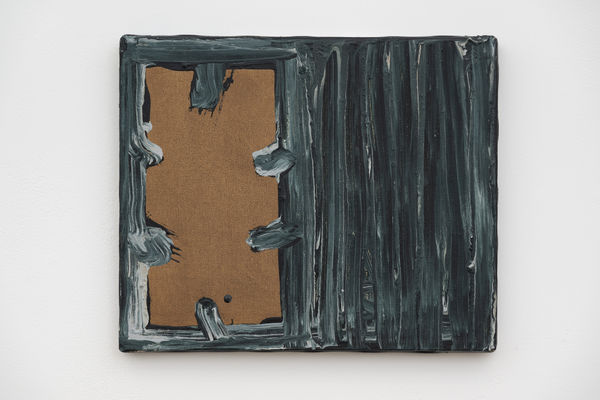
Often architectural in suggestion, Beattie's motifs imply doors, ladders, towers, and corridors-spaces that invite or resist entry, sometimes dissolving into more elusive shapes. Combined with the physical handling of paint, these pictograms communicate aspects of the artist's inner life and psychological state.
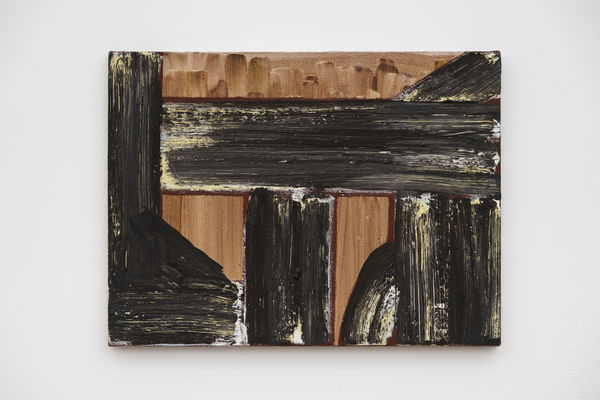
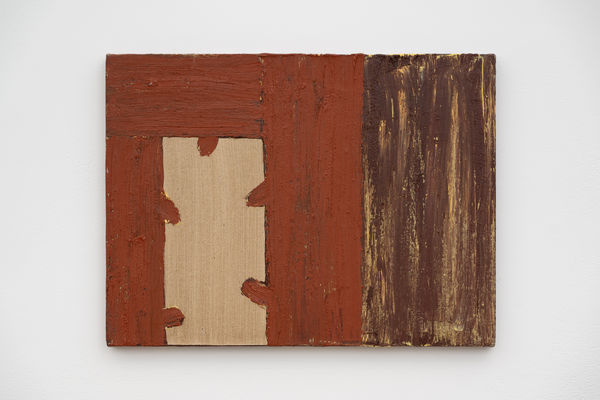
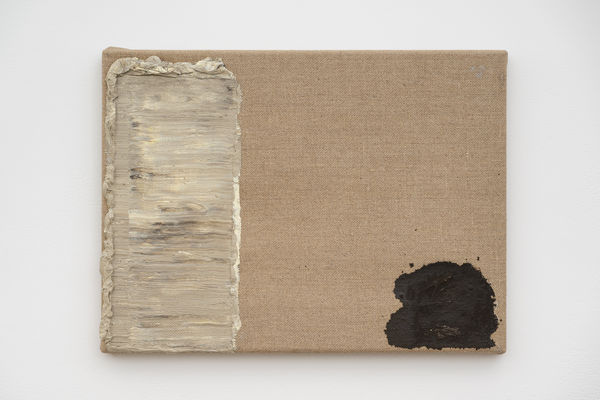
Another Place has an imposing physical presence, featuring two columns of thickly painted arcs and a door-like opening that emanates light from within a dark field. Rectangular tunnels and thresholds recur throughout the exhibition, echoed across the smaller works, which maintain the same muscularity and material density. The thickness of the paint is of central importance: Beattie has described his most successful works as possessing a kind of potency, hovering in space with a molten quality, as if the paint has reached its melting point.
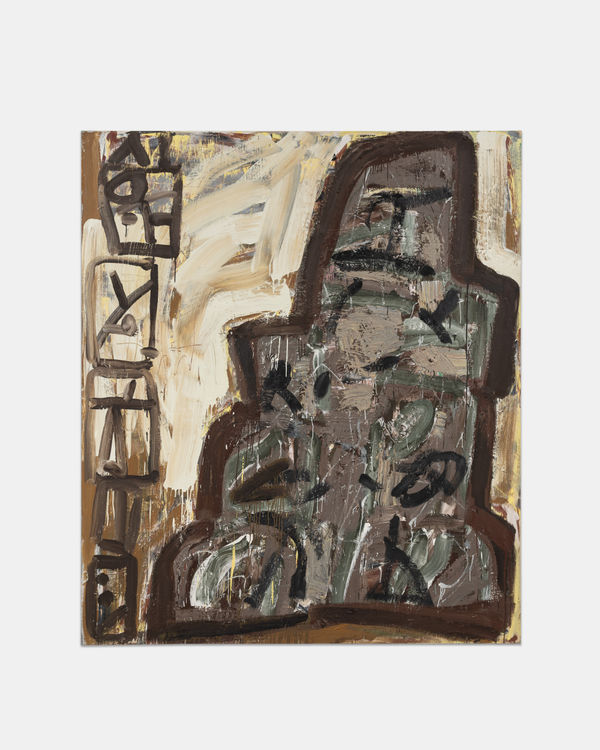
During the 1990s, Beattie developed his major Witness series, in which earlier grid-based compositions were distorted into freestanding forms. The central ziggurat motif-constructed from compartmentalised sections-holds deep personal significance. Works such as Witness and Tower combine layered gestural marks with distinct architectural blocks rising to a point, recalling the ancient towers of Babylon.
The 1990s were a defining era of critical and formal development for Beattie. His triumphant use of the pictogram communicates not only an image drawn from the real world, but a profound and embodied experience.
Paintings from this period are in the collections of Tate, London; Birmingham City Museum and Gallery, Swindon Museum and Art Gallery; MIMA; and Arts Council England.
Beattie's work has been featured in numerous exhibitions at prestigious institutions, including solo shows at Tate Britain, London, UK; Royal Academy of Arts, London, UK; Middlesbrough Institute of Modern Art, UK; Jerwood Gallery, Hastings, UK; IKON Gallery, Birmingham, UK; Castlefield Gallery, Manchester, UK; Sadler's Wells Theatre, London, UK; and Goldsmiths Gallery, London, UK. His works have been included in critical group exhibitions at the Barbican Centre, London, UK; Camden Arts Centre, London, UK as well as the Jerwood Painting Prize 1998 and 2001 at Jerwood Gallery, London, UK; and Gallery of Modern Art, Glasgow, UK; and John Moores Painting Prize exhibition in 2015, 2016 and 2017 at Walker Art Gallery, Liverpool, UK. Beattie's work can be found in numerous public and private collections including: the Royal Academy, London; Contemporary Art Society, London; Government Art Collection; the Jerwood Collection; Whitworth Art Gallery, Manchester; Southampton City Collection/Art Gallery; Deutsche Bank; and NatWest Group Art among others.
Beattie graduated from the Royal Academy schools in 1961 and was elected a member of the Royal Academy of Arts in 2006. He lives and works in London.
[1] Moorhouse, P. Basil Beattie, Taking Steps, Large Works 1986-2009, 2011, ArtNews Contemporary Art, p58
Works
Installation Views


